
What is ignored by the media -- but studied by historians?
The gap between the news, consensus, and historians.

We’re going to go back in time to see my favourite news stories from history.
But before we transport back in time together, let’s take these words from historian David McCullough with us:
“History is not about the past. If you think about it, no one ever lived in the past… They didn’t walk about saying, “Isn’t this fascinating living in the past! Aren’t we picturesque in our funny clothes. They lived in the present. The difference is it was their present, not ours. They were caught up in the living moment exactly as we are, and with no more certainty of how things would turn out than we have”
So, I make one request as we travel back in time: Don’t imagine you’re in the past. Instead, imagine you’re living in the fog of their present moment.
It’s 1920s, New York City. You live on the fifth floor of an apartment in Brooklyn. Charlie Chaplin is the biggest movie star in the world. You smoke a pack of Lucky Strikes a day. The Ford Model T out front cost you $290.
Or it’s 1930s, London. You live in Camden. A double decker bus picks you up outside of your apartment. Men wear bowler hats. Women wear felt cloche hats. Everyone on the double decker bus is talking about this new technology: Radio.
Ready to soak in the fog?
…
It’s New York City, 1924. You gradually open your eyes. It’s Sunday 21st December, four days before Christmas.
Knock knock knock.
You get out of bed, half asleep, pop on your dressing gown, and open the door. The paperboy has already disappeared. You pick up the copy of the New York Times, walk back to your kitchen, pour a cup of coffee and light up your first Lucky Strike of the day. You flick through the pages until a headline on page 16 catches your eye.
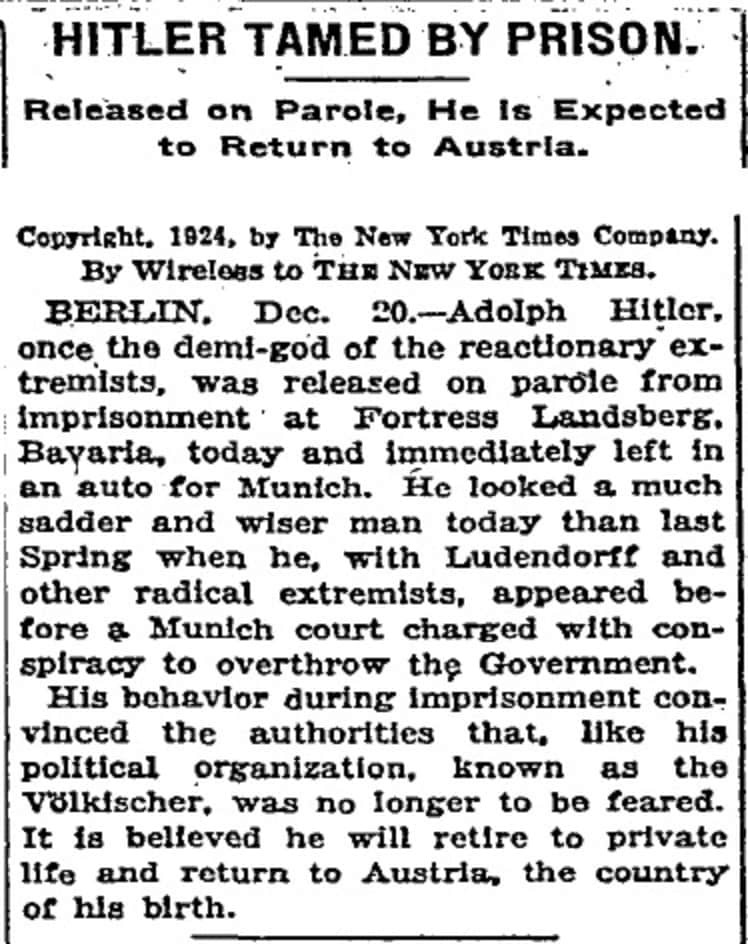
Adolf Hitler. Tamed by prison. Looking a much sadder and wiser man. Will retire to private life.
Can you feel the fog?
…
Five years later, it’s Manhattan 1929. Everyone is getting filthy rich.
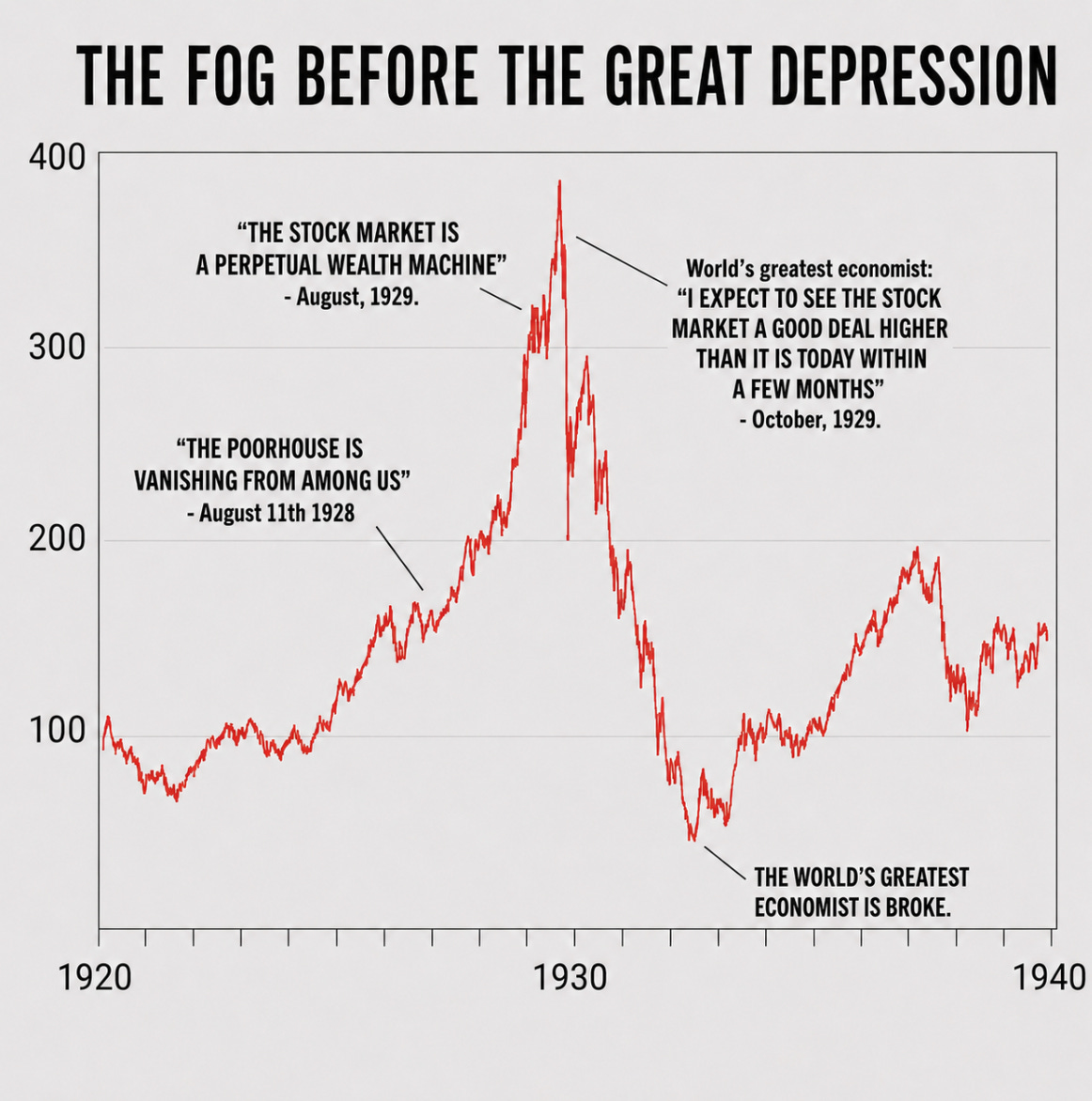
Your neighbour Frank has made your annual salary in one steel trade. Your brother-in- law has tripled his money in the stock market. Every elevator operator, cab driver and shoeshine boy is giving you stock tips. And here’s some of the media you’ve consumed over the last few months.
“THE POORHOUSE IS VANISHING FROM AMONG US” - Herbert Hoover, about to become president of the United States, declared that America was nearer to “the final triumph over poverty”. August 11th 1928.
“THE STOCK MARKET IS A PERPETUAL WEALTH MACHINE… Anyone saving $15 per month could retire with $80,000 (roughly $1.4 million today)” - John Raskob, who funded the Empire State Building. August, 1929.
“I EXPECT TO SEE THE STOCK MARKET A GOOD DEAL HIGHER THAN IT IS TODAY WITHIN A FEW MONTHS” - Irving Fisher, the man labelled by some as “the greatest economist ever to live”. October 15th, 1929.
And nine days after that prediction, the Great Depression began. Within three years, the stock market lost 90% of its value.
President Herbert Hoover, who suggested America was near the end of poverty, would preside over the worst poverty in American history. Within three years, a quarter of the country was unemployed, and the shantytowns that sprang up around America had a name. Hoovervilles.
Irving Fisher, known by some as the greatest economist ever to live, who had a net worth of $10 million before the crash ($190 million today), took out loans, borrowed money from his sister and son to re-invest in the market as it crashed. He lost it all — including his house.
Can you feel the fog?
…
Now, you’re in London. Friday, 30th September, 1938. 5.52am.
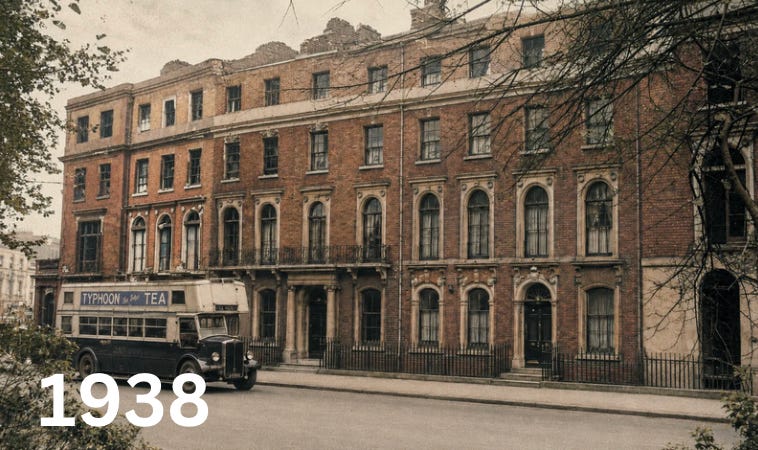
You wake up at the crack of dawn. Here’s where you live in an apartment in 35 Harrington Square, Camden.
The man who retired after prison to lead a peaceful private life, Adolf Hitler, rules Germany. Winston Churchill has been banned by BBC for the last five years, and rhe owner of the London Evening Standard, Lord Beaverbrook, has fired Winston Churchill from the newspaper.
And last night, Prime Minister Chamberlain flew out to meet Hitler to negotiate peace. And you’re waiting in that Harrington Square apartment to get the news.
Whilst you wait for the news to arrive at your doorstep, here’s a quick reminder of some of the news you’ve consumed leading up to this day:
“I TALKED TO HITLER.” Lloyd George, the former Prime Minister, wrote: “He is the George Washington of Germany — the man who won for his country independence from all her oppressors”, Daily Express, September 17th, 1936
“HURRAH FOR THE BLACK SHIRTS” - A fascinating opinion piece you read, by Lord Rothermere, the owner of the Daily Mail. Daily Mail journalists came in black shirts, in support of the Nazi party.
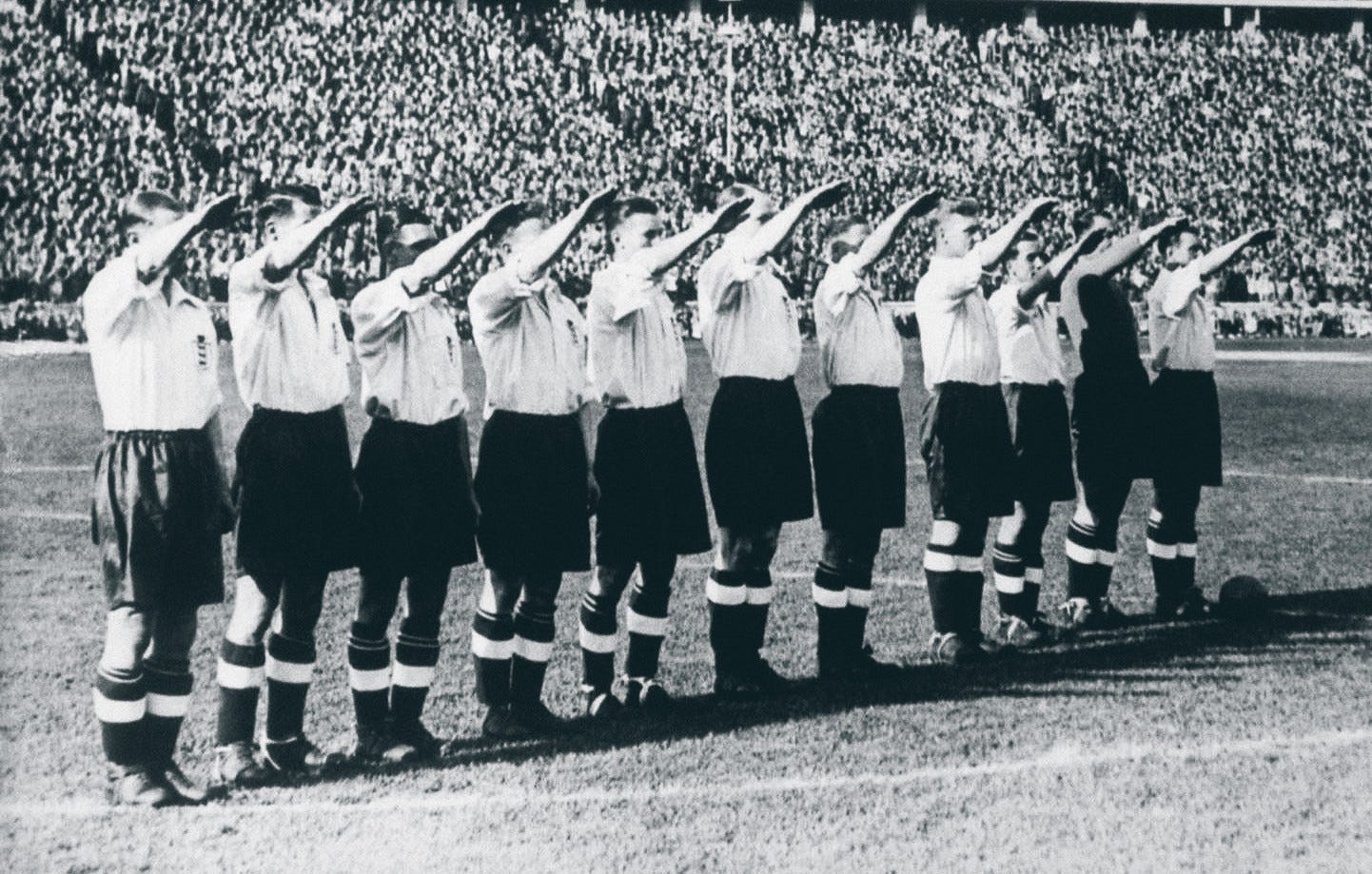
England Beat Germany 6-3. The England Team gave the Nazi salute during the German national anthem. “The English team immediately made a good impression by raising their arms in the German salute.” - The Times, May 6th, 1938.
Knock knock knock
You walk to the door of your apartment, Ronnie the ginger paperboy hands you the newspaper and written in the biggest font ever used by a British newspaper:
PEACE.
“The Daily Express declares that Britain will not be involved in a European war this year, or next year” 30th September, 1938.
You exhale a sigh of relief. Throw your bowler hat in the air and bear hug Ronnie the paperboy.
As you get on the double decker bus commute, people are drinking alcohol and suggesting Chamberlain should win the Nobel peace prize.
…
And eleven months and four days later, Sunday 3rd September 1939, World War II began.
Winston Churchill, the man kept off the airwaves by the BBC and removed from the London Evening Standard, becomes Prime Minister fighting against the man tamed by prison, Adolf Hitler.
Lord Beaverbrook, who fired Winston Churchill from the London Evening Standard, and the owner of all the papers that declared Hitler ‘the George Washington of Germany,’ that ‘there will be no war,’ and ‘PEACE’ eleven months before Britain went to war, would apologise to Churchill, and became head of the Air Ministry during the war.
The Fleet Street printing press, the place that printed those newspapers that got delivered to your doorstep, is on fire after being bombed by the Luftwaffe.
Seven of those England football players that gave the Nazi salute — served in uniform fighting against the Nazis.
And that house you lived in, 35 Harrington Square, was bombed to rubble. When people arrived at the scene, they discover leaning at a 45 degree angle, a double decker bus.
Can you feel the fog?
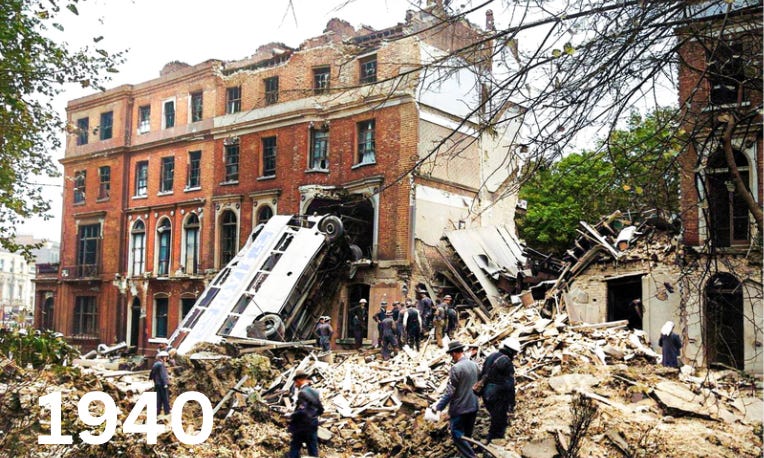
This is a real image. The first image you saw of it in 1938, I used AI to imagine what it looked like before the bombing happened. But the one with the bus flipped, that’s a real image of what happened to 35 Harrington Square. Seven of the eleven family members were killed.
…
Let’s go back further to 476 AD.
The day after most history textbooks now say the Roman Empire fell.
Teenage emperor Romulus, named after the founder of Rome, was overthrown and replaced by the barbarian Odoacer. As the saying goes: Romulus saw Rome rise. And Romulus saw Rome fall.
Now, imagine you woke up as a shop keeper on that historical day.
Nobody would’ve stopped you in the street to say: “The Roman Empire has fallen.”
In the book The Sovereign Individual, the authors remark that if CNN existed during the fall of Rome — the CNN editors would not have approved of a headline saying “ROME HAS FALLEN” — because everyone alive was living in the fog of the present moment.
The currency in your hand was still Roman. The laws governing your shop were still Roman. The decline you would have noticed — if you had noticed anything at all — was the same slow decline your grandparents had complained about, and their grandfather before them.
The first record we have of someone suggesting 476 was the end of the Roman Empire was Marcellinus Comes — in 518. That’s forty-two years after when most history textbooks say the Roman empire fell, for someone to suggest that the Roman Empire might have fallen that day.
But dear reader, let’s not confuse one person’s opinion with consensus.
When did everyone come to consensus that the Roman Empire had fallen?
Well, in 800 AD, Charlemagne was crowned emperor of the Roman Empire by Pope Leo III. Charlemagne was believed by himself and many others to be a legitimate emperor of the Roman Empire — 324 years after the fall of the Roman Empire.
French philosopher Voltaire famously mocked people who still believed in the Roman Empire: “The body which called itself and still calls itself the Holy Roman Empire was in no way holy, nor Roman, nor an empire.” — Voltaire said this in 1756!
Francis II formally dissolved the Holy Roman Empire rather than surrender it to Napoleon — in 1806. That’s 1,330 years after the day history textbooks say the Roman Empire fell.
If you waited for Francis II to tell you the Roman Empire was over, that shop keeper that was alive the morning Romulus fell in 476, would’ve been your Great-great-great-great-great-great-great-great-great-great-great-great-great-great-great-great-great-great-great-great-great-great-great-great-great-great-great-great-great-great-great-great-great-great-great-great-great-great-great-great-great-great-great-great-great-great-great-great-grandparent.
~ Forty-eight generations.
…
Now, wake up and you’re back in 2026.
When we see today’s news or talking points, we should remember the past lives we’ve just lived through.
Before we passively download the news into our head, a better question to ask ourselves is: “What is ignored or neglected by the media — but will be studied by historians?”
Stop looking at the news. Start wondering, what will future historians say about today?
One common trait that high agency people share is they don’t wait for the news and they don’t wait for consensus.
They study history, craft their own information sources, apply sandboxes for new information, and make the move before the consensus agrees.
High agency people look for little clues that nobody else is paying attention to, but future historians will.
This doesn’t just apply to the macro — it also applies to the micro.
Don’t wait for a friend to tell you to get that mole checked — by then, it’s too late.
Don’t wait for your boss to call you in to their office — by then, it’s too late.
Don’t wait for your partner to text you “Can we talk?” — by then, it’s too late.
Now, let’s leave these two lessons from history permanently lodged in our brain.
1. If you wait for the news to inform you, you’ll often be wrong or late.
2. If you wait for society to agree, you’ll always be wrong or late.
Notes:
1. On a personal note, the story of the fall of the Roman Empire haunted me. It made me think of myself, born into the most powerful empire alive today — The British Empire. If the British empire falls at some future date and is no longer the most powerful country in the world, nobody on the BBC will inform me. There will never be a headline of: “The End of the British Empire”. And British people may live in denial for generations after the event. So, I must keep a proactive look out and not live in denial. If you see any clues that Great Britain is no longer the most powerful country in the world, please send it my way. I don’t want to be that person living in denial long after the British Empire has fallen.
2. When I say ‘what is ignored by the media but studied by historians’ Imagine the media-historian gap as gone giant spectrum. When I say ignored, I mean in proportion of attention to what historians will give it.
The fog of the present is real, and I think part of why it's so hard to escape is that we're trained to trust consensus as a proxy for truth. If everyone around you sees nothing unusual, the cognitive cost of seeing something unusual becomes very high. The historians' question is useful precisely because it changes the frame from "what is happening" to "what will have mattered." Those are almost never the same question.
Great piece. One for the anti consensus, paranoid contrarians.